

Someone can leave a crypto wallet app unopened for a month without selling anything. When they return to check their balance, they may reappear in an activity count, despite having owned the same cryptocurrency all along. Ownership measures who holds an asset. Wallet activity measures who performed a particular action within a specified period. A rise in active users can include returning owners, while a quiet month in an app does not establish that people have sold their holdings.
In a January 6, 2025 analysis, a16z crypto reported that monthly mobile wallet users had crossed 35 million in December 2024. It separately described people who own cryptocurrency without regularly making blockchain transactions. The wallet figure was a measure of use during that period, not a count of everyone who owned cryptocurrency. Nor did it establish how many users had bought crypto for the first time. Existing owners could contribute to the monthly total alongside people making their first wallet visit.
What Counts as Active?
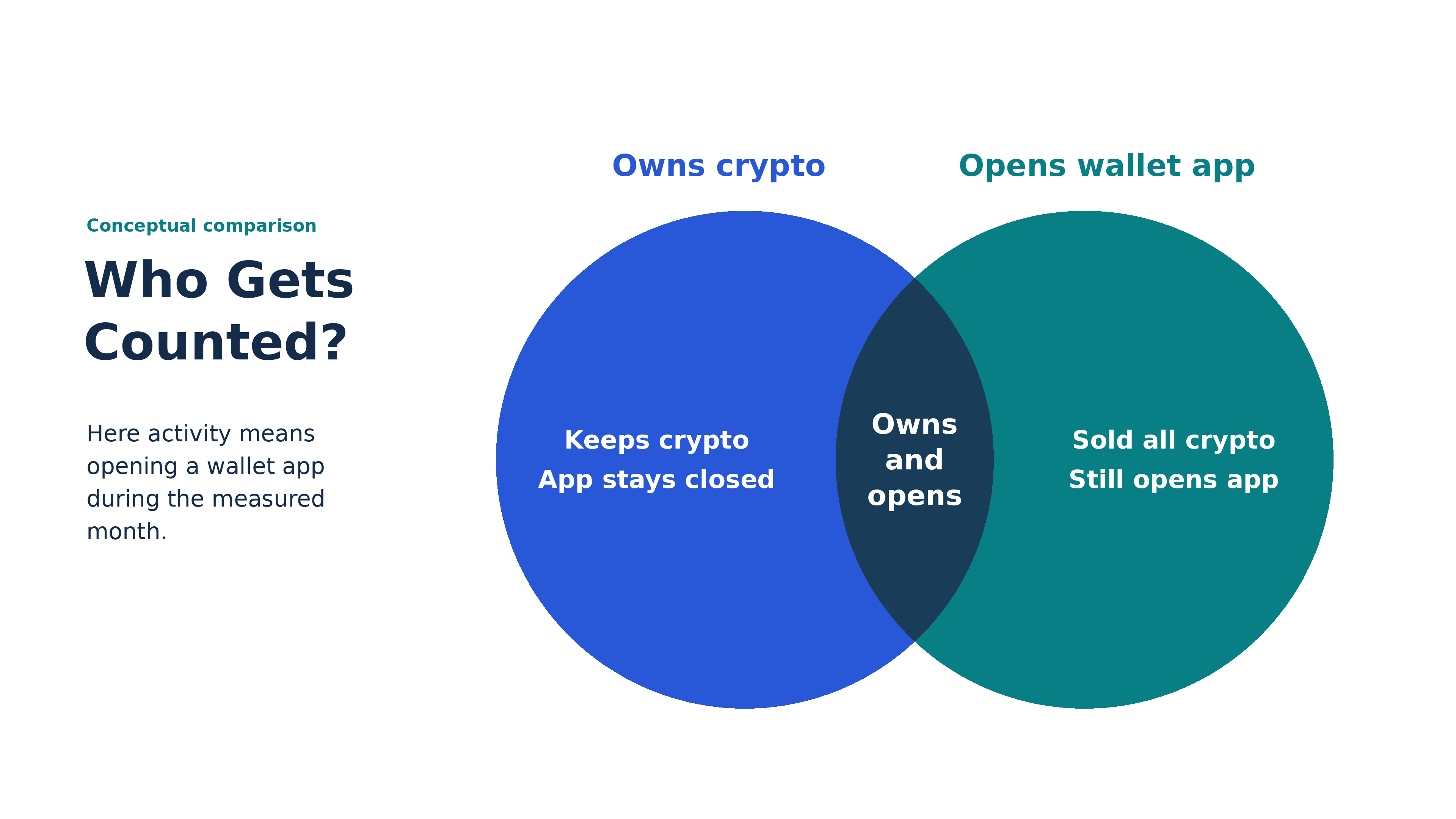
Opening an app and completing a transaction are separate actions. A balance check can qualify under a measure based on app visits, even when no cryptocurrency changes hands. When following ongoing digital-asset coverage from AlphaWire, check whether an adoption figure counts owners, app users, or people completing transactions. An increase in monthly wallet users can describe existing owners returning to an app, without establishing that more people own cryptocurrency. The definition also sets the minimum activity needed to qualify. If one opening is enough and each recognized user is counted once, someone who checks once and someone who checks daily each contribute one user to that month’s total. Neither count reveals how much cryptocurrency a user holds. A measure limited to completed transactions would exclude someone who only checked a balance. If a report changes its qualifying action between months, a lower total could reflect the new counting rule, rather than changed behavior.
One person can also appear in two apps' monthly totals. Adding those totals would count that person twice unless the overlap is removed. If the person switches apps, one provider can lose an active user while another gains one. Neither change requires a purchase or sale of cryptocurrency, and the combined number of individual crypto owners can remain unchanged.
One Owner Across Three Months
Let's say that a hypothetical owner holds the same amount of cryptocurrency throughout April, May, and June. For this example, opening one particular wallet app at least once during a calendar month qualifies them as active. They make no purchases, transfers, or sales during the three months.
In April, the owner opens the app to check their balance and enters the activity count. In May, they leave it closed. They disappear from May's active-user total but would still answer yes to a survey asking whether they currently own cryptocurrency. The app records no visit; the person has made no change to their holdings.
A June visit puts the owner back in the monthly count. If the app recognizes their previous use, they qualify as a returning user. Calling them a new crypto owner would be inaccurate. Even adding April's and June's user counts would count the same person twice across the two months.
An unchanged monthly total can hide a different pattern. One owner might stop opening the app just as another existing owner starts using it. The number of active users stays level, but the people behind that number change. Identifying returning users requires information about their earlier activity, beyond the monthly total.
Comparing the Same People and Period
The reporting window can change whether a person appears active. An opening on April 30 is outside May's calendar-month count, but inside a 30-day window ending May 10. A report published in May can therefore sometimes include someone who has not opened the app during May.
The set of apps being measured can change, too. Adding another app to a dataset can raise the reported total without any increase in use across the original apps. Measuring the same set in both periods separates growth within those apps from the effect of expanding coverage.
Ownership surveys have their own boundaries. In a July 22, 2025 report, Gallup found that 14% of U.S. adults reported owning cryptocurrency. Its online survey ran from June 2 through June 15, 2025. That percentage reflected respondents' reported ownership, regardless of whether they had opened a wallet app that month. It did not identify how many owners had completed a transaction during June.
Dividing the earlier mobile-wallet total by an estimate of U.S. crypto owners would not reveal the share of owners who were active. The figures cover different populations and periods, and the wallet count does not establish which users belong to the surveyed population.
Current ownership also differs from past ownership. Someone who sold all their cryptocurrency could still open an empty wallet app and qualify under an app-visit rule. They would answer no to a current-ownership question, but yes to a question asking whether they had ever owned cryptocurrency.
Measuring how many owners actively use wallets requires ownership and activity information for the same population and period. The data must connect current ownership with the qualifying action. Without that connection, an activity increase cannot identify how many additional people became crypto owners.